General Comments
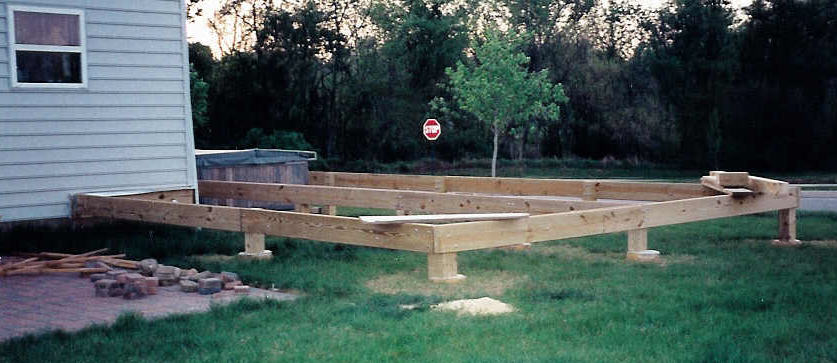
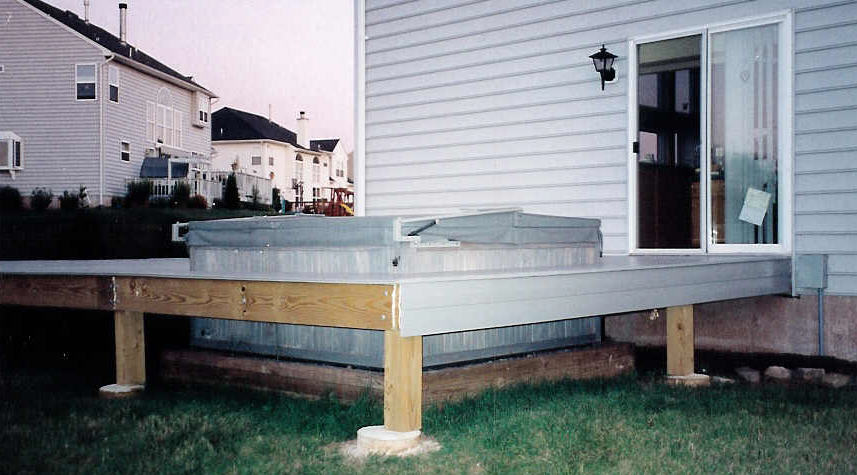
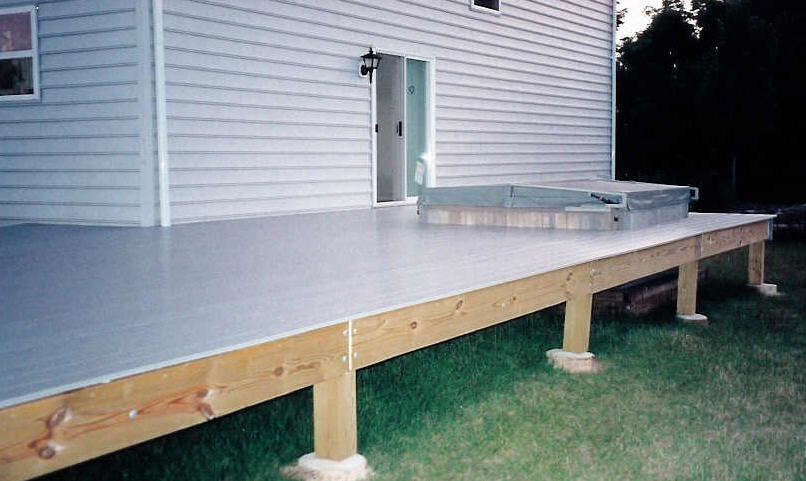
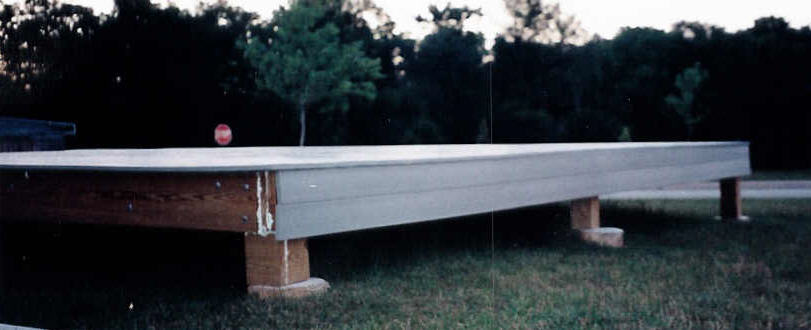
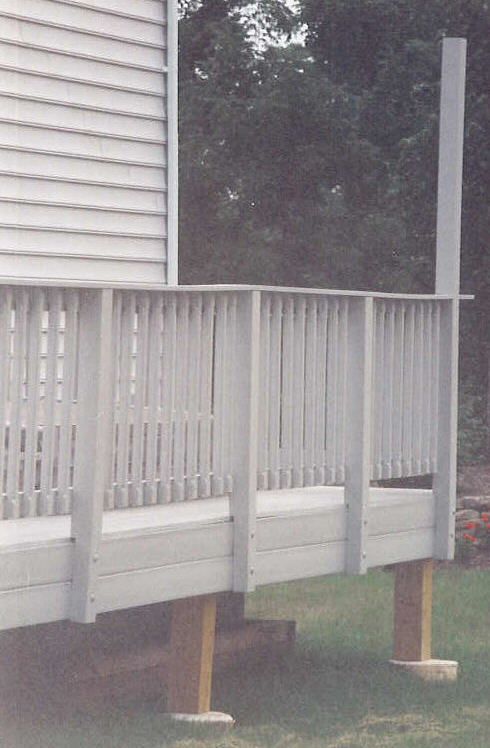
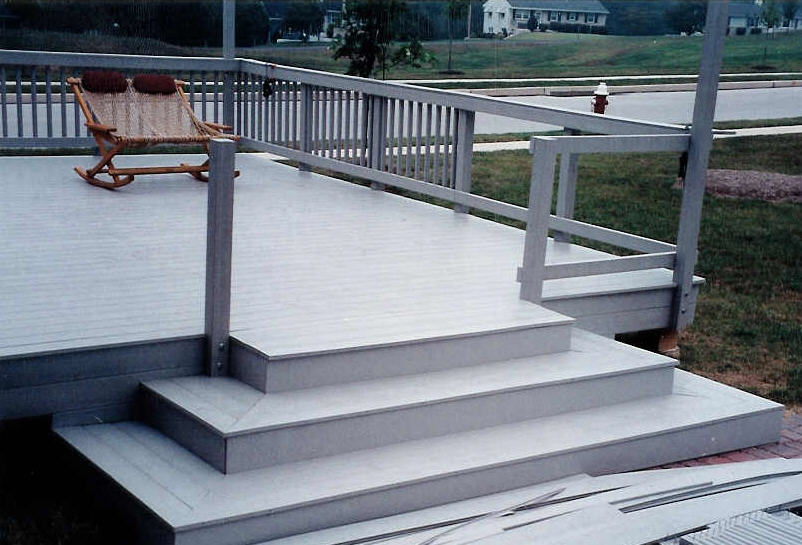
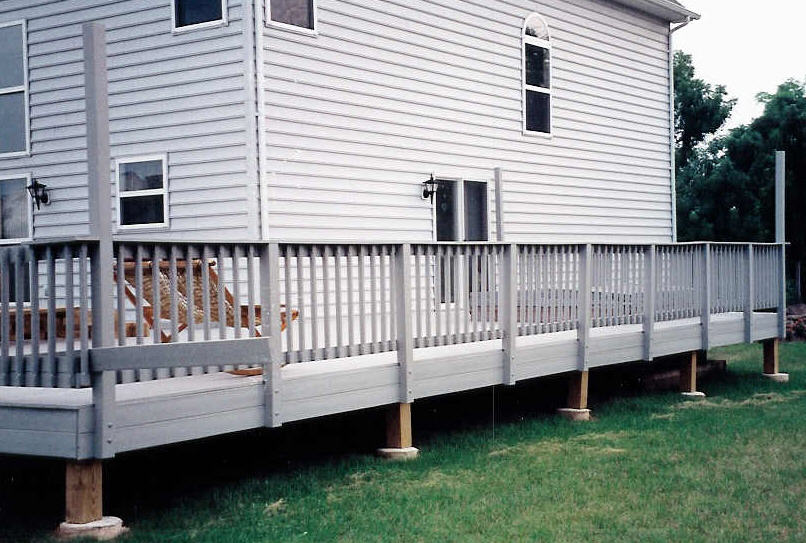
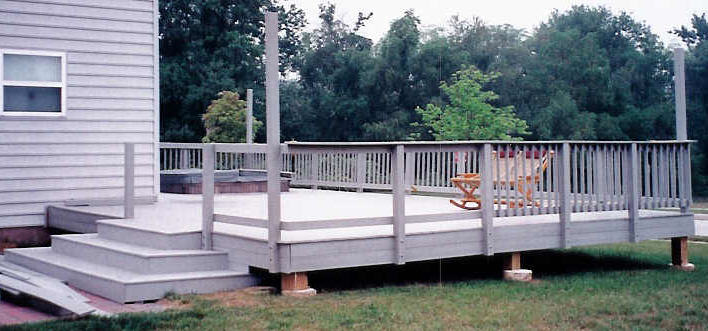
I like the idea of recycling, and using recycled materials. I don’t like the idea of maintenance. So a plastic deck is right up my alley. After almost 2 years, it’s finally finished. The first year was spent fighting with the town to get a variance, since we live on a corner. The second year was spent building it. It sure looked a lot smaller on paper than it does in real life!
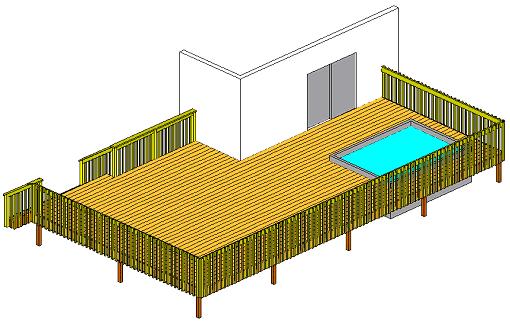
I drew up the plans using an old copy of Sierra Home’s 3D Deck v3.0. Since this is obsolete and not sold anymore, I got it for about $12 on some liquidation Internet site. I also used an evaluation version of a professional grade program to double-check everything, but I can’t remember the name of that one.
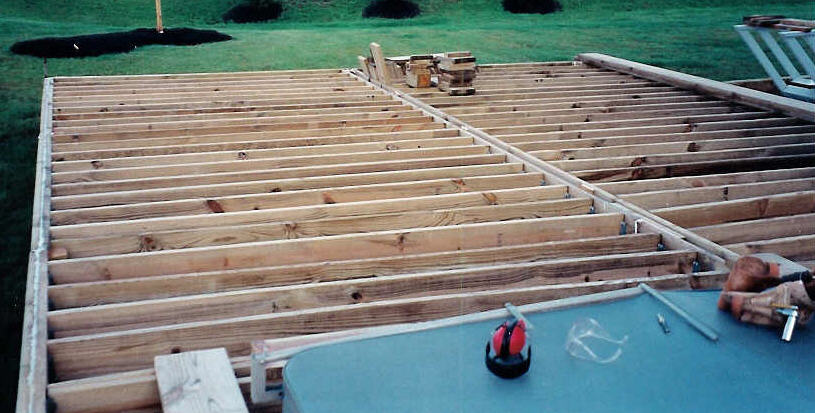
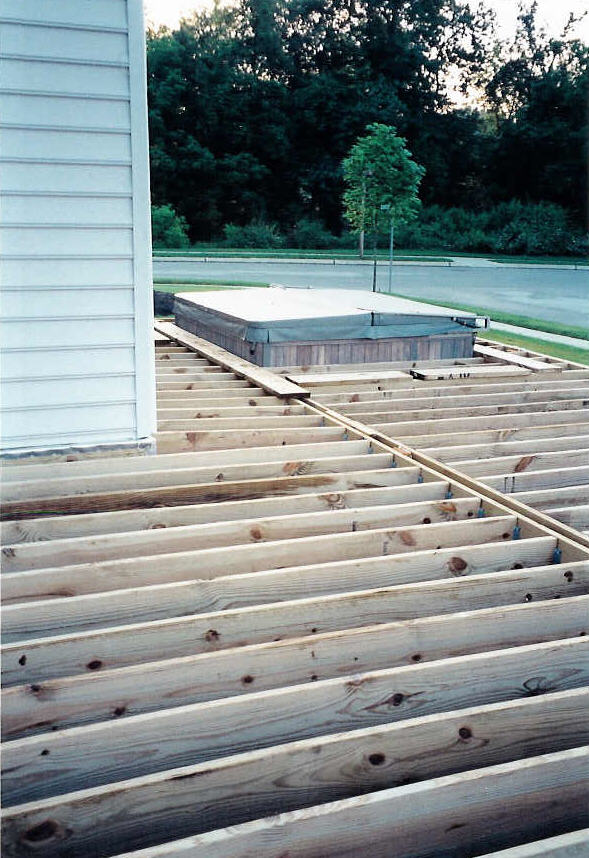
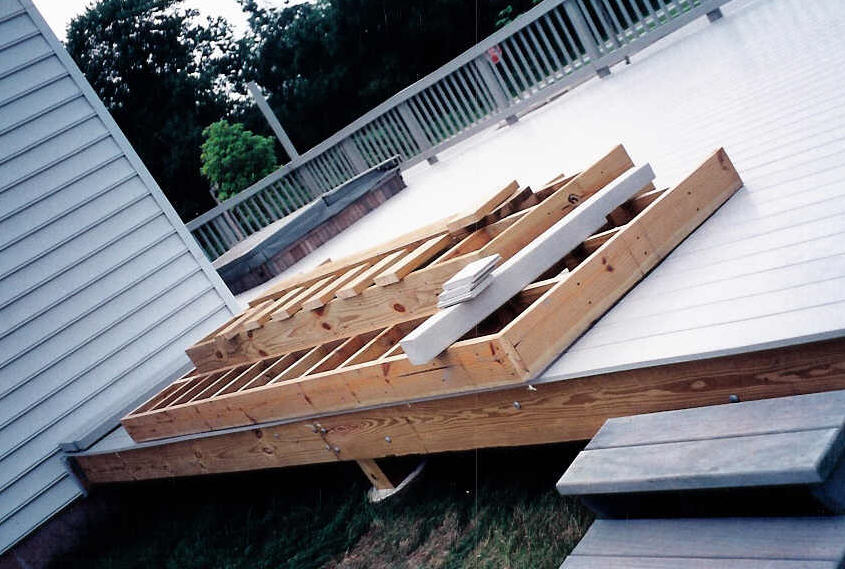
Then I went to Home Depot and had them use their deck program to come up with the materials list for the sub structure, which is pressure treated (PT) wood. Unfortunately, their program can’t do 12" OC joists. We put in everything, but specified no decking, railing, etc., then I took the quote home and reworked it. I added the materials for the 12" OC joists from their default 16". I also optimized the lengths and materials so that my final order, with more material than the original, was $500 less, and I should have had almost no waste. They picked everything, and delivered it on a truck a few days later. Nice! Of course, they were out of the 2"x10"-10’ boards I ordered. So they gave me 2x10-12 for the same price. Now have a pile of 2x10⁻² waste… :-( I used a lot of that for braces and parts in the frames for the stairs, but I still had a bunch left over.
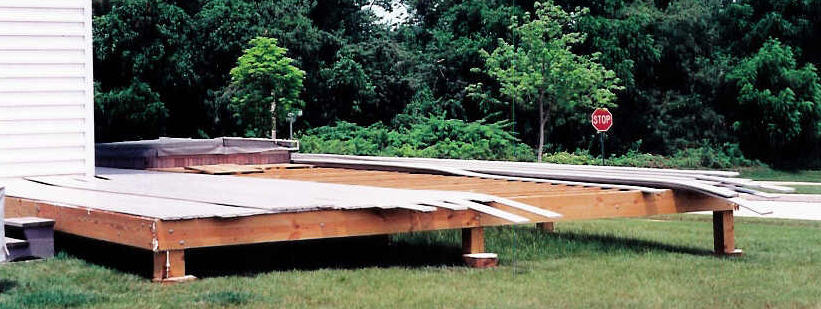
Getting the plastic was a bit more of a challenge. This is partly my fault, since as a first time deck builder (and this is the largest project like this I’ve done as well), I made a bunch of changes to the order. If I’d had all my ducks in a row, I think everything would have gone more smoothly. As it was, I ended up driving to the manufacture’s site and helping to load the truck myself, because I was tired of waiting for the material. This also seriously delayed the project into summer, which resulted in even more delay, since I did not work when it was too hot, or in direct sunlight.
My other complaint is with the stainless steel screws I used. I stripped, torqued the heads off or bent at least 10% of them! They had square drive heads which seemed to be very soft. They were also very sharp, which means they bit into the plastic and drove well, but you had to be very careful in reaching for a handful of them.
Plastic Lumber
Two pictures of the deck and the plastic lumber appear in the Spring 2005 issue of Coastal Contractor magazine in Materials Report: Plastic Decking.
Pros
- Will look the same in 20 years with virtually no maintenance.
- Will never rot, crack, splinter, or chip, and never needs paint, stain or sealer.
- Will not leach chemicals into the ground or water.
- Is not slippery when wet. (It is quite slippery when snowy/slushy though!)
- Is recycled and is 100% recyclable.
- None of defects often found in conventional lumber, such as knots, decay, splits and milling imperfections (see below about extrusion defects though).
- Requires NO special tools – ALL regular wood-working tools work well.
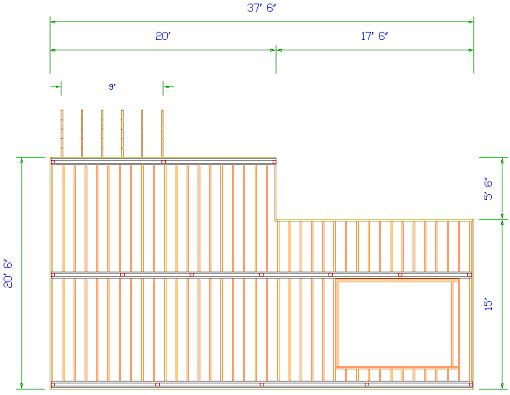
- Comes in different colors and custom, exact lengths (e.g. 37’ 6" – no seams).
- Can get tongue and groove decking (no visible screws).
- Screws with small heads sink into the material, then the plastic closes up a bit to minimize the appearance of screw holes.
- Holds screws and nails much better than wood (in theory, not sure about practice, especially when really hot).
- No allergic reactions sawdust – much safer than PT sawdust.
- Dog claws don’t seem to have any effect (not sure about cat claws) and dogs can’t get traction when trying to move fast, which can be amusing.
Cons
- Much more expensive than PT, around the same cost as high-quality cedar.
- May have extrusion defects, such as creases, bubbles (visible when cut), warping, thickness variation, etc.
- Much more flexible than wood, thus you need joists 12"OC, the joists must be perfectly level (or the decking will follow the contours), and long pieces can be quite difficult to maneuver because they flex so much (picture a 40 foot long wet lasagna noodle).
- Even my light gray color gets hotter than wood in strong direct sunlight. In SE PA my light gray deck is too hot to walk on in bare feet in the summer in full sunlight. With any kind of shade, not in summer, or with oblique light it’s fine. It’s actually pretty much the same as my black asphalt driveway, come to think of it. Presumably, darker colrs would be worse.
- Much more expansion/contraction than wood – requires planning. Long planks may tear out screws and come lose. (" For every 8 foot section in length expansion and contraction of 1/4" will occur in every 50 degree temperature change. Thickness and width will not change.")
- May generate a lot of static electricity when walking or sliding on it! Dogs can find this very shocking (sorry) when they sniff you and get zapped.
- It is quite slippery when snowy/slushy. (Not slippery when merely wet.)
- You have to clean up the sawdust – you can’t just let it rot into the ground, because it won’t.
- While is is recyclable, my recycling people won’t take it because it’s not a plastic jug or bottle…
- Seems to get dirtier than wood. We’re in a high air traffic location, which may have something to do with it. And I’ve never spent a lot of time with a wood deck, but it seems like the plastic really holds the dirt. If you walk on it in socks they get filthy quickly.
- You can scratch it up draging heavy furniture around. Be very careful of anything with metal feet.
Conclusion
The final approval for the finished deck was granted 2001-09-18. I’m very happy with the way it turned out. I added a grounding wire to try to reduce the static problem, but needless to say that did not help at all.
If I had it to do over again, knowing what I know now, I’d do pretty much the same thing. I might try to fasten it differently, but I’m not sure how. I’d have to figure out something that would slide a bit to allow for more expansion/contraction. Maybe there is something on the market now that wasn’t then?
Update 2003-11-06
So far so good. It is weathering nicely, which is to say not much at all. Expansion and contraction is a problem as expected. Joints (in the railings and so forth) that used to be tight are loosening up, and I have a bit of moss on the north side. But other than hosing it down once or twice I have not touched it!
Update 2006-10-09
Still weathering nicely, which is to say not much at all. Expansion and contraction still a problem as expected. The railing joints have loosened a lot, even with some additional screws. One deck plank literally ripped across because I didn’t leave quite enough room around a notch for a railing post. Dirt and moss about the same, a quick pressure wash easily fixes that. A regular hose does not seem to help much.
Update 2026-02-17
The expansion and contraction issues have ripped more boards, and have broken out many (nearly all?) of the screws holding the boards down to the joists. The tongue and groove is still holding together, so even if the surface is mostly “floating” on the joists…it’s working. I probably did it wrong back then, and/or there are probably clever new fasteners now. I’m not worrying about it, it’s still solid after 25 years with zero maintenance except for some half-assed pressure washing every couple of years.